Rust solo survival in 2026 and what Blooprint's monument hold teaches about playing alone
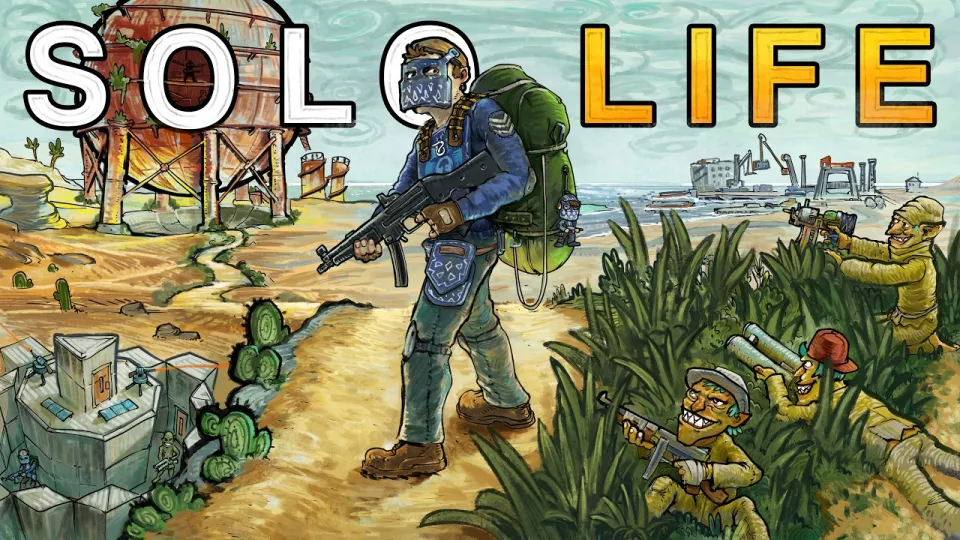
Video: Rust - THE SOLO LIFE V16
Need articles like this for your video? They help promote it on YouTube and Google — order them in the Telegram bot @sat_sit_bot. It writes articles around your video, embeds the video and publishes them on popular niche websites (no ads). Your first 50 articles are free.
· based on the channel Blooprint
Key takeaways
- Blooprint's Solo Life V16 is a fully solo run: one player holds an OP monument while multiple neighbours try to push him out.
- The run leans on parachute drops, Dome and Cargo monument routes, plus online raid defense rather than offline raiding.
- Solo Rust in 2026 still rewards cheap kits and Eoka plays early, then snowballs into LR-300 and scoped pressure.
- A friendly neighbour becomes the emotional core of the run and redeems himself during the final raid defense.
- The episode follows A Solo's Journey 4, and the creator says solo content is now the main direction for the channel.
Rust solo survival means running every role on a server alone — farmer, builder, raider and defender — and Blooprint's Solo Life V16 shows the practical version of it: one player takes an OP monument, holds it against several angry neighbours, and defends his base in an online raid without a single teammate. The episode is a working template for anyone who wants to play Rust solo in 2026 without hiding in a 1x1 and logging off. If you want to try the same pace yourself, you can grab the sponsored War Thunder bonus through the Blooprint registration link and support the channel while you are at it.
What a solo monument hold actually looks like in Rust
Holding an OP monument alone is a resource trade, not a flex; the solo player accepts constant pressure in exchange for loot density and map control. Monuments like Dome and Cargo give a solo the two things he cannot farm fast enough on his own: components and crates that spawn close together. The catch is that every other group on the server knows the same thing, so a solo who camps a monument effectively becomes the monument's landlord and its most popular target at the same time.
The V16 run makes that trade explicit. Blooprint sets up around a monument, keeps the loot flowing, and then spends a large part of the episode answering neighbours who want the spot back. The lesson for solo players is simple: pick a monument you can leave in under ten seconds, keep a stash away from the main base, and treat every crate run as a fight you might have to take.
The solo Rust kit progression that V16 follows
A solo Rust wipe follows a predictable kit curve, and the episode tracks it closely enough to use as a checklist. Cheap gear first, then a scoped weapon, then enough explosives to matter — the order matters more than the speed.
- Primitive pressure: bow and Eoka plays decide the first hours. A one-tap Eoka is still the cheapest way for a solo to convert a bad position into a full kit, and it costs almost nothing to replace.
- Starter base: a compact starter with a small footprint, a second entrance and a nearby backup stash beats a big base that screams "raid me" to every group on the map.
- Scoped mid-game: an LR-300 with a sight turns a solo from a scavenger into a threat at range. The editing around the LR sights in this episode is a reminder of how much of solo PvP is decided before the first shot lands.
- Raid tools: satchels and rockets only make sense once you can defend what you take, which is why the raid defense matters more than the raid itself.
Base defense against multiple neighbours
Online raid defense is where solo Rust is won or lost, because a solo cannot out-DPS a group and has to out-position it instead. The V16 finale is built around exactly that: several attackers, one defender, and a base that has to stay standing long enough for the attackers to run out of patience and explosives.
Practical rules that come out of that fight:
- Build for angles, not for size. Peek windows, a shooting floor and a roof exit give a solo more value than extra honeycomb.
- Keep a second kit in a separate room. Losing the fight because you respawned naked is worse than losing a door.
- Use the turret and the noise. Attackers who have to watch two directions burn more time and more meds.
- Expect the raid to be online. Groups raid solos when they are awake and bored, and the neighbours in this episode clearly were both.
Parachutes, Dome and Cargo routes
The parachute is the most underrated solo movement tool in Rust, and V16 uses it as a routine part of the loop rather than a stunt. A parachute turns a bad spawn, a lost fight or a cut-off monument into a reset: you leave the fight vertically instead of running through the same choke point everyone is watching.
Dome and Cargo work well for solos for the same reasons. Dome is compact, has verticality and offers quick exits; Cargo is a moving monument that resets the map pressure every time it spawns. Combining the two with a parachute gives a solo a route system instead of a routine, which is what keeps a wipe interesting past day three.
Reading the neighbours, the accents and the chaos
The social layer is the real content of a solo wipe, and V16 leans into it hard. Viewers picked up on the Argentine accent of one of the players involved and on the Spanish-speaking crew that kept showing up, and that is exactly how solo Rust feels on a busy EU or NA server in 2026: you are never fighting a nameless enemy, you are fighting the same six people who know where you live.
A friendly neighbour becomes the standout character of the run. He helps, he gets into trouble, and he redeems himself in the final defense. For solo players the takeaway is not sentimental: a reliable neighbour is worth more than a turret, because he extends your reaction time and your information. The other side of that coin is the group that wastes twenty minutes chasing one solo — the comments noticed that too, and they are right. Time is the resource groups burn fastest against a solo who refuses to die on their schedule.
Questions solo players keep asking
Night vision and dark scenes come up constantly, and the honest answer is that Rust nights are still close to unplayable without a light source; a night vision toggle does not fix a monitor that cannot resolve the shadows. Plan your wipes around daylight pushes and use the night for farming and crafting.
Another recurring question is whether solo content is worth watching when you already play solo. The answer from this episode is yes, because the value is in the decision-making — when to leave a monument, when to take the Eoka fight, when to defend instead of rebuild. Watching a solo wipe is the cheapest way to borrow someone else's mistakes.
Useful links
- War Thunder bonus, PC and consoles: https://wtplay.link/blooprint
- War Thunder bonus, mobile: https://wtm.game/blooprint
- Twitch: https://www.twitch.tv/blooprint
- Kick: https://kick.com/blooprint
- TikTok: https://www.tiktok.com/@blooprintgames
What Solo Life V16 proves about playing Rust alone
Solo Life V16 makes the case that a solo wipe in Rust is a discipline problem before it is a skill problem: hold a monument you can escape, build a base you can defend, keep a second kit, and treat every neighbour as either an asset or a threat with nothing in between. The episode lands right after A Solo's Journey 4 and confirms that the channel's solo direction is deliberate rather than a detour. Channel author Blooprint builds the run around one monument hold and one raid defense, and both are worth copying. If you want to back the channel and pick up a free bonus at the same time, use the War Thunder signup link.
Source: Rust - THE SOLO LIFE V16 · Markdown version
Questions & answers
Is it realistic to hold a monument solo in Rust in 2026?
Yes, but only if you treat it as a short-term trade rather than a permanent home. A solo can hold a monument like Dome or Cargo for a few hours by keeping a nearby stash, leaving fast and never fighting the same group twice in the same spot. The moment you start defending the monument instead of farming it, you have already lost the advantage.
How does a solo player survive an online raid from a group?
By building for angles and time rather than for size. Peek windows, a shooting floor, a second kit in a separate room and a turret that forces attackers to watch two directions all buy the minutes you need. Groups raid solos when they are bored, so making the raid expensive is usually enough to end it.
Why do streamers use parachutes so much in solo Rust?
A parachute converts a losing position into a reset. Instead of running through the choke point where the fight started, you leave vertically, land on a different monument or your own roof, and re-enter with a fresh kit. It is the cheapest escape tool a solo has.
Is the Eoka still worth using as a solo in 2026?
Yes, at the start of a wipe. A one-tap Eoka costs almost nothing and can convert a bad position into a full kit from a player who expected an easy kill. It stops being useful once scoped fights and real armour enter the picture, so treat it as an early-wipe tool.